Deliverability2 min read
What is a catch-all email? Reading an unknown result
Short answer
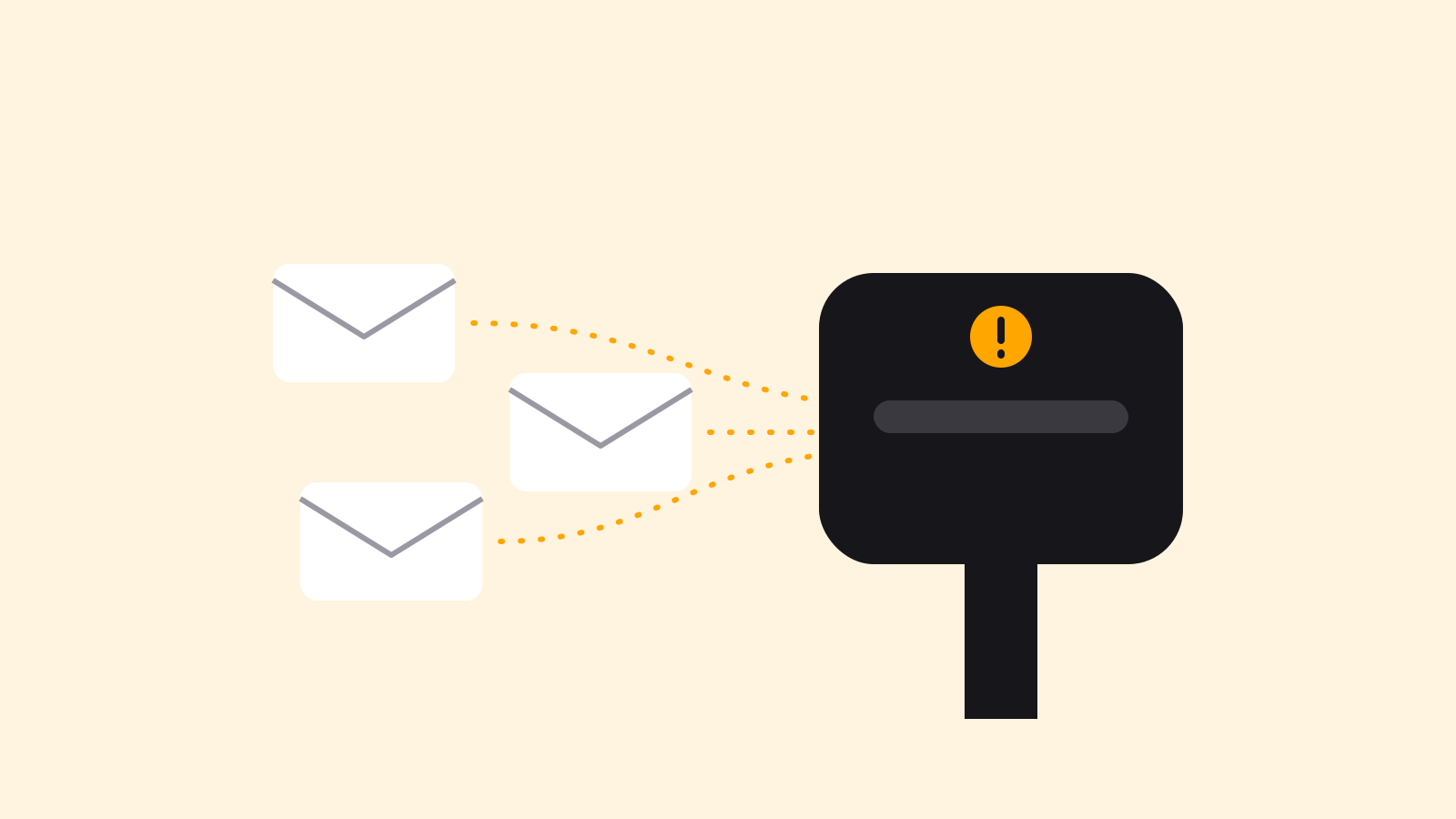
A catch-all domain replies 250 to every recipient address, real or not. So an SMTP check on these domains cannot learn whether one mailbox exists. A verifier tests the domain once with a random address, caches the result and marks the domain's addresses as unknown and risky.
Key takeaways
- Catch-all is a domain setting, not a property of a single address.
- Detection is one SMTP query per domain, using a random address.
- A catch-all address never scores into the safe band.
What does catch-all mean?
Catch-all means a domain's mail server accepts unknown recipients instead of rejecting them. Companies turn it on so mail sent to a misspelled address still arrives. As a result, ali@company.com and surely-not-real-123@company.com get the same 250 reply.
For verification the problem is simple: when the server says yes to everything, yes tells you nothing. The mailbox may exist, or the message may be silently discarded or bounce later.
How is a catch-all domain detected?
The verifier builds an address that cannot exist on the domain, such as a long random local part. If the server replies 250 to that one too, the domain counts as catch-all. The test runs once per domain and the result is cached for days, so the server is not asked again for every address on it.
- RCPT TO is asked for the real address and the server replies 250.
- RCPT TO is asked for a random address on the same domain.
- If that also returns 250, the domain is flagged as catch-all.
How does catch-all affect the score?
CleanBounceList scores every address from 0 to 100, and 85 or above is the safe band. A catch-all address cannot pass 85, however good its other signals are, and stays at most in the "review" band. That keeps the safe group in your report made of proven addresses.
Should you send to catch-all addresses?
- If you collected the address yourself and the person knows you, send at low volume and watch bounces.
- If the address is old or its source is unclear, keep it out of your main campaign.
- Send a small batch first and remove the addresses that bounce.
Frequently asked questions
Does catch-all mean the address is invalid?
No. Catch-all only tells you the domain accepts every recipient. There may or may not be a real mailbox behind the address, so the result is unknown and risky rather than invalid.
Can Gmail or Outlook addresses be catch-all?
Gmail usually rejects missing mailboxes on personal accounts at the SMTP stage, so it rarely shows up as catch-all. Outlook often delays the rejection, so its addresses can stay unknown. On company domains, the admin decides.
Does checking a catch-all address cost credits?
Yes. Every unique row checked costs one credit, whatever the result. Duplicate addresses in the same list and errors on our side are free.